
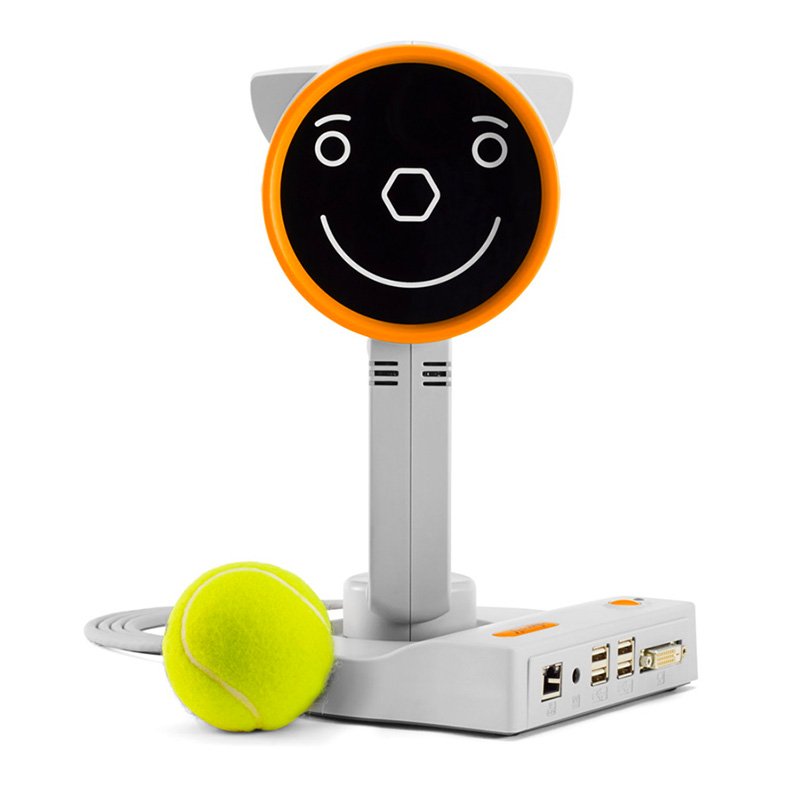
DescriptionThe plusoptiX S16 is a handheld vision screener. It checks the refraction of both eyes at the same time. You conduct this test from a distance of 1 meter. It does not use any medication during the process.The PlusOptix Vision Screener Model 16 is a high-quality device. It helps healthcare professionals check a patient’s vision quickly. This high-quality vision screener is perfect for medical and lab equipment, devices, and healthcare settings. Also ideal for use in business and industrial settings.With its advanced technology and innovative design, the PlusOptix Vision Screener always provides accurate and reliable results. Perfect for use in vision screenings and visual field assessments. This device is a must-have for anyone seeking high-quality eye care services.Plusoptix has developed a hand-held autorefractor that is mainly for children. The plusoptiX 16 suits are available in doctor’s offices, orthoptist practices, and eye clinics.The plusoptiX 16 measures refraction, pupil size, and distance. It also checks the gaze of both eyes together. This all happens in less than 1 second from a distance of 1 meter. The reliable and delegable measurement will substantially simplify the entry examination of the children. Powered by how to get embed code from youtube and casino uden rofus Features and BenefitsBinocular readings with simultaneous measurement of both eyes.The measurement values correspond with the results of a sciascopy in narrow pupil.The measurement is taken fully automated, and can be performed by an assistantMeasurement from 1m (3.3 feet) distance to the childMeasurement in less than one secondCan be used in undilated pupilsFully automated functionChildren can be measured starting at 5 months of ageOptional external printer availableMeasurement results are compared to age specific thresholds and a “Pass” or “Refer” vision screening result is displayed (“Refer” vision screening result need to be sent to an eye care professional for an eye examination)The Spherical equivalent is portrayed instead of the sphere, to assure that the referral criteria can be used independently from the cylinder adjustment in settings. The Spherical equivalent is defined as “Sphere ½ Cylinder“IncludedS16 Stationary Vision Screener(1) Power AdapterplusoptiX S12C/S12R/S16 Carrying Case(1) Power CordUser ManualNote: Onsite training is availableThe measuring principle is based on eccentric photoretinoscopy: infrared light is projected through the pupils onto the retina. Depending on the refractive error, the reflected light forms a specific brightness pattern within the pupil. The spherical refraction is calculated based on this crescent pattern.To determine cylinder and axis, the same measurement is repeated in three meridians. The measurement with infrared light is completely innocuous. Infrared light is also contained in daylight and not visible.Screening ResultsPlusoptix vision screening devices provide reliable measurement values of:Refraction (spherical equivalent)Pupil diameter and pupil distanceSymmetry of corneal reflexesWith these measurement values it is possible to detect the following most prevalent childhood vision disorders that may lead to the development of amblyopia (lazy eye) including:Hyperopia (farsightedness)Myopia (nearsightedness)Astigmatism (blurred vision)Anisometropia (unequal refractive power)Anisocoria (unequal pupil size)Strabismus (eye misalignment)With the determined measurement values compared to age specific thresholds, a “Pass” or “Refer” vision screening result is displayed. Children with a “Refer” result need to be sent to an eye care professional for an eye examination.Technical SpecificationsDimensions: 9″ x 6 5/8″ x 11″Weight: 3 lbsPower SupplyInput: 100 to 240 VAC (50 to 60 Hz), 0.8 AOutput: 12 VDC, 2.5AMeasurement ValuesMetered Value: Measurement range and toleranceSphere: -7 to 5 dpt in 0.25 dpt steps ± 0.25 dptCylinder: -7 to 5 dpt in 0.25 dpt steps ± 0.25 dptAxis: 1 to 180° in 1° steps ± 15°Spherical Equivalent: -7 to 5 dpt in 0,25 dpt increments ± 0,25 dptPupil Diameter: 4 to 8 mm in 0.1 mm steps ± 5%Gaze asymmetry: 0 to 25° in 0.1° steps ± 5°Interpupillary Distance: 25 to 85 mm in 0.1 mm steps ± 5%Interfaces: USB, DVI, IR, WLAN, LAN (RJ-45)Standards: EN 60601-1WLAN Interface StandardsPhysical Layer: Supports 802.11 b and g standardsNetwork Architecture Types: Communication with cabled networks via access pointsSecurity: WPA and WPA2Transmit Power: 802.11b/g: 50 mW ( 17 dBm) typicallyFrequency Range: 2,400 – 2,4897 GHzOperating Channels:1-11 for North America1-13 for EuropeChannels: Supports all channels of 802.11d-APsRX Sensitivity86 dBm typically @ 11 Mbps,82 dBm @ 6 Mbps,69 dBm @ 54 MbpsData Rates802.11g: 6, 9, 12, 18, 24, 36, 48, 54 Mbps802.11b: 1, 2, 5.5, 11 MbpsReferenceBrochure
 No products in the cart.